

Could Nose-picking Increase Your Risk of Developing Alzheimer’s?
SNL's Weekend Update sparks an interesting discussion around Alzheimer's Disease

Rhinotillexomania, the medical term for picking one’s nose, has recently come into discussion in a potential connection to Alzheimer’s Disease (AD).
A few weekends ago, Saturday Night Live’s Weekend Update included a quick joke about this possible connection. Michael Che amusingly commented, “Damn, how deep are y’all digging?”
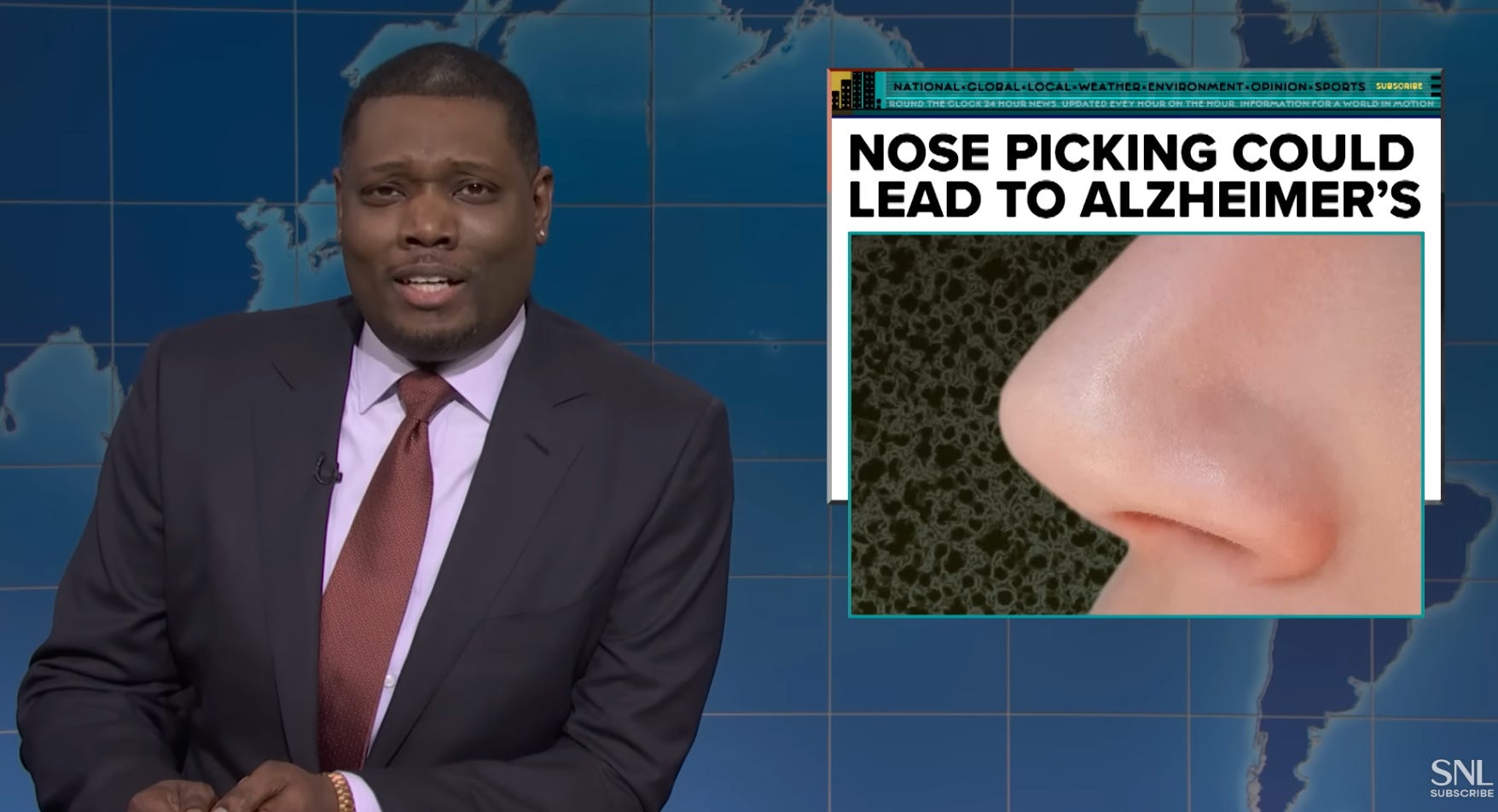
As someone interested in neurodegeneration, this out-of-the-blue comment struck me. It immediately led me to question the validity of this argument. What date supports this claim? How valuable is this research?
On a deeper level, I grew inspired to comment on the public dissemination of research, specifically in neurodegeneration. Should big-time celebrities and major streaming services be publicizing these “findings” to land a joke? How does the spread of information without context or background impact the public’s perception of research advancements?
These are all questions I hope to touch on below. Let’s start with a discussion based on the connection between nose-picking and Alzheimer’s Disease.
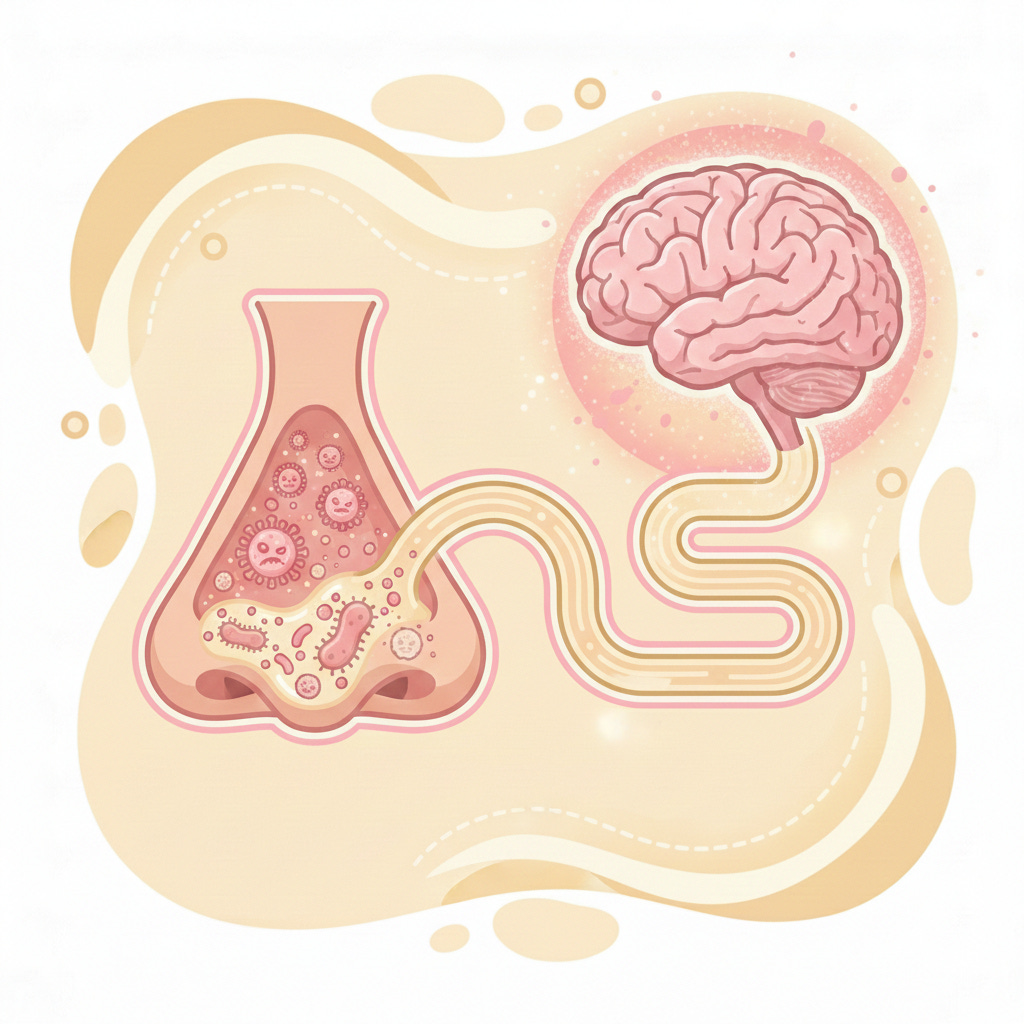
How could nosepicking increase the risk of AD development?
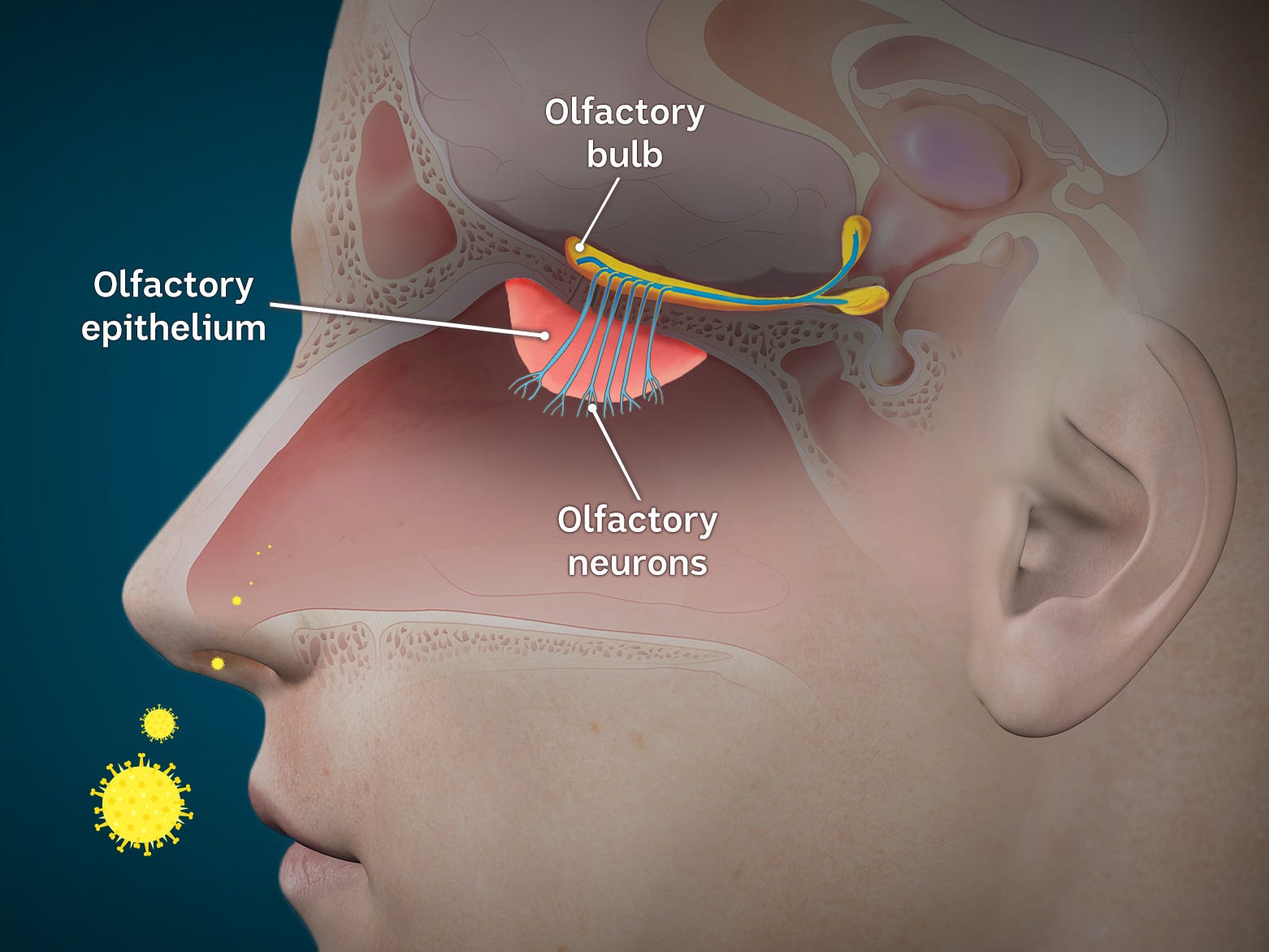
Picking your nose creates a potential pathway for infectious agents to enter your nasal passageway and thus your olfactory system, allowing them to reach the rest of your brain. Recent evidence suggests that these infectious agents, such as viruses, fungi, and bacteria, may play a role in neuroinflammation and the development of key biomarkers relevant to Alzheimer’s disease (AD): amyloid beta and tau tangles. Neuroinflammation has a clear link to the development of AD, and likewise, AD worsens neuroinflammation, forming a negative feedback loop where degeneration worsens exponentially.
Several pathogens have been associated with AD, including multiple viruses, bacteria, parasites, and fungi. Important: Associations do not imply correlation or causality. Many of these pathogens act on peripheral tissues, including those within the nasal passageway, and enter the brain. Interestingly, an early detection of AD is the loss of smell. Also, the olfactory bulb, the epithelial tissue in the nasal cavity, is one of the first brain regions impacted by AD pathology, with the early presence of amyloid beta and hyperphosphorylated tau.
The blood-brain barrier (BBB), which protects the brain from pathogens, has a relatively lower integrity at the olfactory bulb, making it more susceptible to foreign pathogens. In this manner, the olfactory system is highly susceptible to foreign pathogens, making for easier entrance into the central nervous system (CNS).
Here are the pathogens mentioned in the review paper that have ties to AD. Check it out for more information.
Viruses: Herpes viruses (especially HSV-1), severe acute respiratory syndrome coronavirus 2 (SARS-CoV-2, which causes COVID-19),
Bacterias: Chlamydophila pneumoniae (Clamydia), Porphyromonas gingivalis, Staphylococcus aureus,
Parasites: Toxoplasma gondii
Fungi: Candida spp., Malassezia spp., Cladosporium spp., and Alternaria spp.
Does the data hold?
The data to support this claim isn’t powerful, with epidemiological studies only proving association, not causation. While studies like this can look back at previous data of Alzheimer’s patients and their lifetime nosepicking tendencies, we can’t conclude causality because there was no controlled intervention. Rodent studies can provide insight into causally proving relationships between pathogens in the nasal pathway and AD development.
One example study infected mice intranasally with C. pneumoniae (chlamydia). In just 72 hours, C. pneumoniae infected the brain. In 28 days, C. pneumoniae deregulated genes relevant to protein folding, leading to protein aggregations characteristic of AD. This demonstrated a direct connection between nasal pathogen entry and plaque formation.
Lesson: Better safe than sorry
Although the data is not overly convincing, nose-picking overall is not recommended. The spread of pathogens is very plausible and should be considered. Nose-picking also promotes nasal infections, nosebleeding, and septum damage.
Alternatives to maintain nasal cavity health include saline sprays/rinses, environmental evaluation (humidity), and blowing your nose.
Should celebrities and the media comment on such topics?
In my opinion, it can be quite harmful to broach such a sensitive topic in the manner Michael Che did on Saturday Night Live. Millions of viewers watch the show live, and millions more watch on secondary channels like YouTube. Che adds a comedic element to this statement, making the topic even more memorable to the viewer. This can be harmful because it promotes the spread of misinformation. Although this argument has some methodological backing, it is not strong enough to be publicized to the layman in such a non-colloquial way.
Although in the context of this paper, reducing nose-picking tendencies likely provides overall health benefits beyond Alzheimer’s disease, it promotes harmful tendencies in the community. Research news must be contextualized when publicized, with discussion of the paper’s limitations and future projections, to avoid spreading misinformation.
For example, when Harvard’s ground-breaking paper on lithium went public, the research team told the general public to continue avoiding lithium until human trials replicated the rodent study’s findings.
Luckily, the information spread from this joke was harmless, but it supplements an ongoing conversation in research around the spread of research news. My blog aims to always contextualize research reports to make sense of the value they bring to the field, while informing the public of a finding’s shortcomings and limitations.
Source:
Zhou, X., Kumar, P., Bhuyan, D. J., Jensen, S. O., Roberts, T. L., & Münch, G. W. (2023). Neuroinflammation in Alzheimer’s Disease: A Potential Role of Nose-Picking in Pathogen Entry via the Olfactory System? Biomolecules, 13(11), 1568. https://doi.org/10.3390/biom13111568
Appreciate the nuanced take on how research gets amplified out of context. The olfactory bulb connection to early AD pathology is genuinly fascinating, especially the fact that loss of smell is an early indicator. The broader point about celebrities spreading non-contexualized findings is spot on though. Association studies get turned into headlines way too fast.